Properties: Pungent, slightly warm
Meridans Entered:
Primary: Lung and Spleen
Traditional Actions/Indications:
- Kills parasites, alleviates itching and astringes wounds
Eczema, sores, chilblain
Tinea
- Dispels Summerheat
Summerheat and warm epidemic diseases
Suggested Daily Dosage: Applied externally on the affected area, or 4-8 tablespoons (57-117g) per day taken internally for a curative effect, or 3-4 tablespoons (50g) per day for preventative or recuperation purposes.
Notable Constituents:
- Caproic Acid / Hexanoic Acid
6-Carbon saturated short chain triglyceride which constitutes approx 1% of coconut oil. Along with caprylic and capric acid, it is named after the Latin for "goat" as goat's milk contains approx 15% of these particular fats.
- Caprylic Acid / Octanoic Acid
8-Carbon saturated Medium Chain Triglyceride (MCT) which constitutes approx 8% of coconut oil. This is the form most associated with ketogenesis as it is readily converted into Β-hydroxybutryate that stimulate the shift in metabolism from glycolysis to mitochondrial fatty acid oxidation sought in ketogenic diets and fasts.
- Capric Acid / Decaonoic Acid
10-Carbon saturated Medium Chain Triglyceride which constitutes approx 6% of coconut oil. It is the medium chain fatty acid most responsible for the anti-seizure effects of ketogenic diets through its action as a non-competitive AMPA receptor antagonist. It may also be responsible for initiating mitochondrial biogenesis, either directly or through the production of hydroxybutryate. It is also used to make esters for purfumes and fruit flavours.
- Lauric Acid
12-Carbon saturated Medium Chain Triglyceride which constitutes approx 45% of coconut oil. It is commonly reacted with sodium hydroxide to make sodium laurate in the manufacture of shampoos and soaps. As the largest of the Medium Chain Triglycerides, only 25-30% is absorbed through the hepatic portal vein directly into the bloodstream. It increases serum lipoproteins more than other fatty acids but mostly in the form of HDLs, however its effect on cardiovascular disease remains uncertain.
- Myristic Acid
14-Carbon saturated Long Chain Triglyceride which constitutes approx 17% of coconut oil. Along with lauric acid, it is the fatty acid most responsible for raising serum cholesterol, although effects on cardiovascular disease remain uncertain.
- Palmitic Acid
16-Carbon saturated Long Chain Triglyceride which constitutes approx 8% of coconut oil. It is commonly saponified with sodium hydroxide to form sodium palmate which is used in soaps and cosmetics. It is also often hydrogenated to form cetyl alcohol used as an opacifier in shampoos, or as an emollient, emulsifier or thickening agent in the manufacture of skin creams and lotions, or as a lubricant in mechanics.
- Stearic Acid
18-Carbon saturated Long Chain Triglyceride which constitutes approx 3% of coconut oil. This is the main form of fat used for energy storage in animals. It is often used as a surfactant and softening agent or saponified for use in shampoos and shaving foam, or hydrogenated to form stearyl alcohol for use as an emollient, emulsifier, and thickener in ointments, or as a hair coating in shampoos and conditioners.
- Oleic Acid
18-Carbon monounsaturated omega-9 fatty acid which constitutes approx 6% of coconut oil. It is the most common monounsaturated fat in the human diet and used to raise HDL for the reduction of cholesterol (LDL), blood pressure and obesity. Many insects also release oleic acid upon death as a signal to others making it a potential insect repellent.
- Linoleic Acid
18-Carbon polyunsaturated omega-6 essential fatty acid which constitutes approx 2% of coconut oil. It is used in the biosynthesis of prostaglandins and cell membranes. It is often used in beauty products and consumed to prevent cardiovascular disease.
Notes:
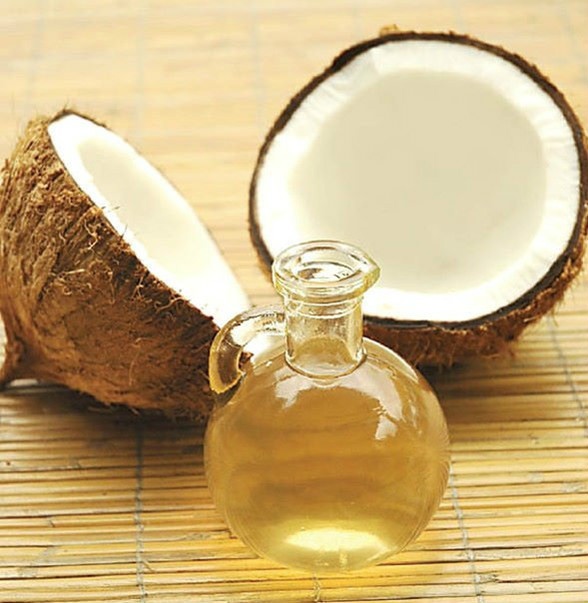
Coconut oil is easily extracted from coconut milk by simply dissolving in water and waiting for the oil to separate. Due to it being mainly saturated fat, it is not harmed by heat and so makes a good alternative to cooking oils.
Does not appear in any formulae listed on this site
Research Links & References: (click to display)
Research Links:
Reference Notes:
Individual herb information has sourced mainly from TCM Wiki and American Dragon for basic data and then updated manually with my own notes. Zhou, Xie and Yan (2011): Encyclopedia of Traditional Chinese Medicines, Vol. 5, and A+ Medical Encyclopaedia have been used for entries not available from those sources with additional material searched for and filled in where available. Western herbs not appearing in the Chinese literature have used Ross (2010): Combining Western Herbs and Chinese Medicine: A Clinical Materia Medica, White Rabbit Institute of Healing and therapeutika.ch. Choices of which source to use or combine have been my own.
These pages are intended to assist clinicians and are not intended for self-diagnosis or treatment for which a qualified professional should be consulted. Actions and indications are taken from traditional uses and do not necessarily reflect the evidence base which should be researched independently. Dosages are for guidance only and will vary dependening on the potency of the batch and the tolerance of the individual so should be evaluated by a professional based on individual needs.