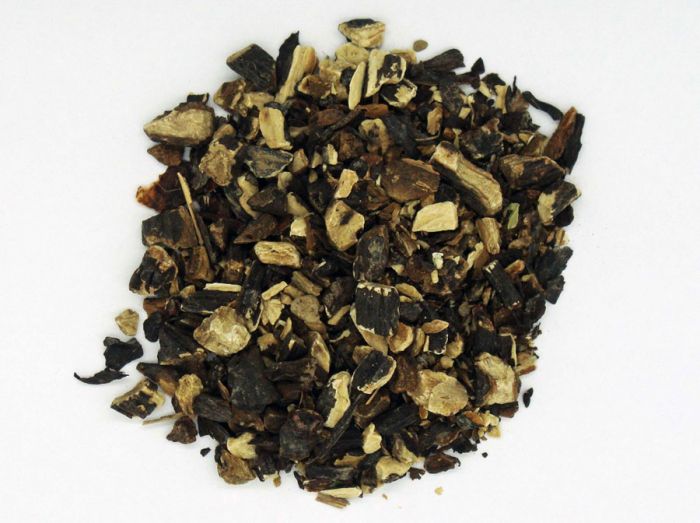
Properties: Sweet, bitter, cool
Meridans Entered:
Primary: Lung, Stomach and Kidney
Traditional Actions/Indications:
- Tonifies Yin
Chronic Lung disease
Dry cough, pneumonia, pertussis, whooping cough
Constipation with dry stool
Dry mouth, thirst
Gastric ulcer, duodenal ulcer
Bone disease, oesteoporosis, oesteomalacia, brittle bones and weak limbs
- Clears Heat and transforms Phlegm
Mucus in the lung with sore throat and cough
Asthma
- Clears Empty Heat
Afternoon fevers due to Yin deficiency
Inflammation
Sore throat, laryngitis
Bronchitis, tuberculosis
- Topically: Promotes healing of wounds, softens hardness and strengthens the tissues
Reduction of scars and callouses
Poor wound healing from contusions, sprains, swelling, bruises, cuts, burns and abasions
Torn ligaments, tendonitis, connective tissue weakness
Broken bones, periostitis
Abscesses, suppurating sores, ulcers, acne
Varicose veins
Suggested Daily Dosage: Traditionally 6-12 in decoction but internal consumption is no longer advised.
Cautions: Due to the presence of hepatotoxic pyrrolizidine alkaloids internal consumption is not recommended. External use is still permitted.
Notable Constituents:
- Allantoin
0.6-4.7% (Staiger, 2012) of the root is comprised of allantoin which is a product of the oxidation of uric acid and present in the urine of most mammals except higher primates. It has healing, soothing, and anti-irritating properties; helps to heal wounds and skin irritations and stimulates the growth of healthy tissue. It is often found in anti-acne products, sun care products, and clarifying lotions as well as toothpaste, mouthwash, and other oral hygiene products, shampoos, lipsticks, cosmetic lotions and creams, and other cosmetic and pharmaceutical products where it is usually extracted from cow urine or the comfrey plant.
Does not appear in any formulae listed on this site
Research Links & References: (click to display)
Research Links:
Reference Notes:
Individual herb information has sourced mainly from TCM Wiki and American Dragon for basic data and then updated manually with my own notes. Zhou, Xie and Yan (2011): Encyclopedia of Traditional Chinese Medicines, Vol. 5, and A+ Medical Encyclopaedia have been used for entries not available from those sources with additional material searched for and filled in where available. Western herbs not appearing in the Chinese literature have used Ross (2010): Combining Western Herbs and Chinese Medicine: A Clinical Materia Medica, White Rabbit Institute of Healing and therapeutika.ch. Choices of which source to use or combine have been my own.
These pages are intended to assist clinicians and are not intended for self-diagnosis or treatment for which a qualified professional should be consulted. Actions and indications are taken from traditional uses and do not necessarily reflect the evidence base which should be researched independently. Dosages are for guidance only and will vary dependening on the potency of the batch and the tolerance of the individual so should be evaluated by a professional based on individual needs.