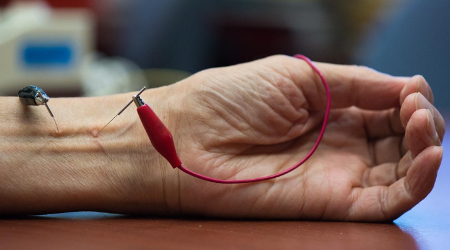
Electroacupuncture combines traditional acupuncture with gentle electrical stimulation delivered through selected needles. By connecting the needles to an electrical stimulator, the strength and frequency of stimulation can be carefully controlled, providing a more sustained form of stimulation than can usually be achieved through manual needle techniques alone.
Although modern in its current form, the idea of using electricity to relieve pain is surprisingly old. Ancient Egyptian and Roman physicians recorded the use of electric fish to numb painful conditions, while Li Shizhen's sixteenth-century Compendium of Materia Medica also describes the medicinal use of the electric organs of certain fish. Modern electroacupuncture applies the same broad principle using safe, precise and controllable electrical currents.
One of the advantages of electroacupuncture is that the stimulation can be standardised. The intensity, frequency and duration of treatment can all be measured and reproduced, making it particularly useful in clinical research.
Research has shown electroacupuncture to be beneficial for certain pain conditions and neurological disorders. Scientists are also investigating how electrical stimulation influences nervous system function, inflammation and cellular energy metabolism, although many of these mechanisms remain an active area of research..
I tend to think of electroacupuncture as providing a stronger or more sustained form of stimulation than traditional needle techniques alone. For this reason, I reserve its use mainly for conditions involving more persistent pain or where additional stimulation is likely to be beneficial.
Once symptoms have improved, I generally prefer to return to traditional acupuncture or manual therapies, using the least intervention necessary to support the body's own recovery.
Woodley Bioenergetics
90 Deane Croft Road,
Eascote, Pinner, Greater London. HA5 1SP
Tel/WhatsApp: +44 (0) 7946 174 829
Email: steve@steve-woodley.co.uk