Tui Na (推拿, "pushing and pulling") is the Chinese system of manual therapy. Like acupuncture and Chinese herbal medicine, it is based on traditional principles of diagnosis and treatment, but instead of using needles or herbs, it uses skilled hands to assess and influence the body's function.
Rather than being a relaxation massage, Tui Na is a clinical therapy. The practitioner identifies areas of restriction, tenderness, altered movement or imbalance through observation and palpation before selecting techniques that are appropriate for the individual. In Chinese, this distinguishes Tui Na from An Mo (按摩), which literally means "pressing and rubbing" and traditionally refers to massage for comfort or relaxation.
Our bodies are constantly responding to mechanical forces. Every movement, stretch and touch provides information that influences muscles, joints, connective tissue and the nervous system. Modern biology increasingly recognises that both our nervous system and our tissues respond to mechanical stimulation, helping to explain why touch, movement and manual therapy can influence pain, function and recovery.
Tui Na uses carefully selected manual techniques to provide controlled mechanical stimulation that encourages the body to regulate pain, restore movement and adapt to physical stresses. As with many traditional therapies, the aim is not simply to force tissues into a new position, but to create the conditions in which the body can recover and function more effectively.
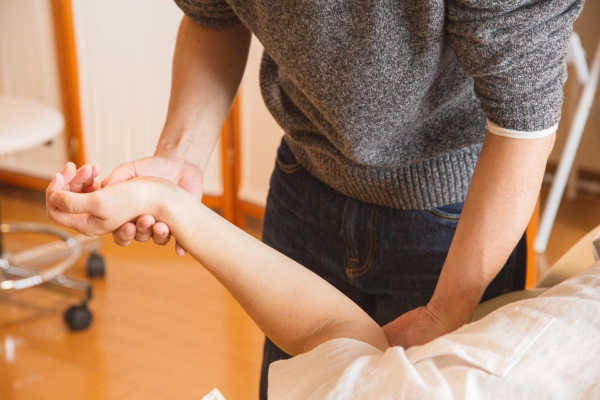
Depending on the individual's needs, treatment may include:
Treatment is usually performed with the patient fully clothed. Oils are generally reserved until the end of treatment to provide gentle analgesia and support recovery, or used during the acute stages of an injury when direct pressure would be inappropriate. Traditional Chinese medicine also makes extensive use of external therapies, including medicated liniments, poultices and topical herbal preparations, allowing treatment to continue even when manual techniques need to be kept to a minimum.
Because Tui Na and acupuncture developed within the same medical tradition, they complement one another naturally. Some conditions respond best to manual therapy, others to acupuncture, and many benefit from a combination of both.
In my practice, the choice of technique depends not on which therapy I wish to use, but on which form of stimulation is most appropriate for the individual. Sometimes this may be a needle, sometimes the hands, and often a combination of both.
Woodley Bioenergetics
90 Deane Croft Road,
Eascote, Pinner, Greater London. HA5 1SP
Tel/WhatsApp: +44 (0) 7946 174 829
Email: steve@steve-woodley.co.uk