For thousands of years, Chinese medicine has recognised the therapeutic value of heat. Moxibustion (艾灸, Ai Jiu)—the application of heat using burning herbs—is thought to pre-date the use of acupuncture needles and remains one of the most widely practised therapies in traditional Chinese medicine. Indeed, the common Chinese term for acupuncture, 针灸 (Zhen Jiu), literally means "needle and moxibustion", reflecting how inseparable the two therapies have always been.
Traditionally, warmth has been used to ease discomfort, encourage movement, support recovery and help restore the body's ability to adapt to physical and environmental challenges. Today, modern science is beginning to understand many of these same processes through the study of bioenergetics, circadian biology and photobiomodulation.
Moxibustion applies controlled heat to acupuncture points or larger areas of the body. Depending on your needs, treatment may include:
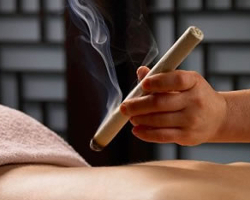 Indirect Moxa |
 Direct Moxa |
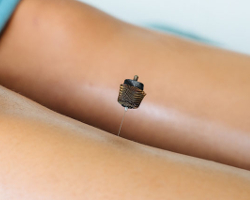 Warm Needle Moxa |
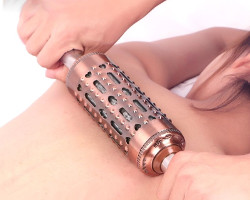 Moxa Roller |
These techniques are often used alongside acupuncture, massage and movement-based rehabilitation to help reduce discomfort and create the conditions for lasting improvement.
Light is much more than something we see. It is one of the body's most important environmental signals, influencing sleep, hormone production, mood and cellular function.
Modern research has shown that different wavelengths of light can have very different biological effects. Bright, broad-spectrum light can help regulate our circadian rhythms, supporting healthy sleep and daytime alertness. Near-infrared (NIR) light penetrates more deeply into the body's tissues and is being actively investigated for its ability to influence mitochondrial function through photobiomodulation—the interaction between light and the energy-producing systems within our cells.
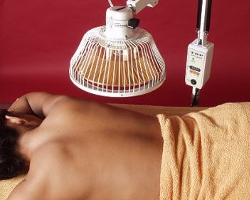
Depending on your needs, treatment may make use of different regions of the light spectrum, each interacting with the body in different ways:
These therapies are never used in isolation but form part of a wider strategy that may also include acupuncture, movement, sleep optimisation and nutritional support.
Many of the benefits of light therapy depend on consistency. Unlike an occasional acupuncture treatment, circadian lighting and photobiomodulation often work best when incorporated into a daily routine. For most people, attending a clinic every day simply isn't practical.
The best source of light is, and always will be, the sun. Natural daylight provides the full spectrum of wavelengths that have shaped human biology throughout our evolution and remains the foundation of healthy circadian rhythms. Whenever possible, my first recommendation is to make better use of this natural resource through sensible daily exposure and good lifestyle habits.
Artificial light therapies are intended to complement—not replace—natural sunlight. They can be particularly valuable during the darker months of the year, when our modern indoor lifestyles limit our exposure to daylight, or when specific wavelengths, such as near-infrared light, are being used for therapeutic purposes.
For this reason, I also provide independent guidance on selecting suitable home-use devices and using them safely and effectively. The rapidly expanding market includes products that vary enormously in quality, wavelength, intensity and intended purpose, and more powerful is not necessarily more effective. Choosing the right device—and using it correctly—is often more important than buying the most expensive one.
My aim is to help you create an environment that supports your body's natural rhythms, helping to create an everyday environment that supports your body's own capacity for adaptation and recovery.
Woodley Bioenergetics
90 Deane Croft Road,
Eascote, Pinner, Greater London. HA5 1SP
Tel/WhatsApp: +44 (0) 7946 174 829
Email: steve@steve-woodley.co.uk